
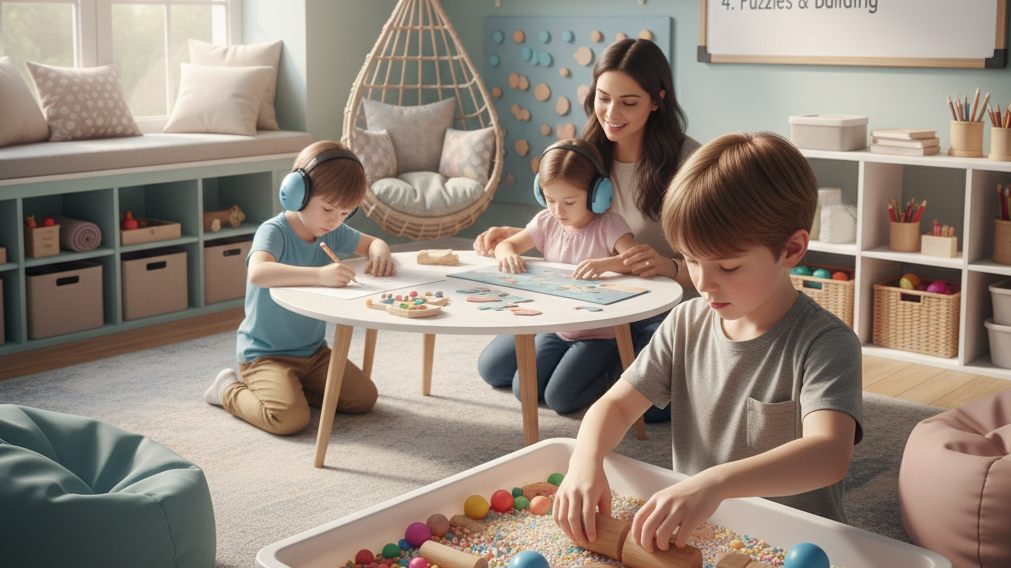
Sensory regulation is the key to a happy and focused life for children on the autism spectrum. Think of the world as a volume control. For many children with autism, this volume control is constantly turned too high or too low. Sensory processing helps them adjust this internal volume. When a child with autism can properly process the activities, sights, sounds, textures, and movements around them, their sensory and nervous system is stable. This stability is directly linked to their emotional state. A regulated child is a calm child. A calm child can learn and play.
Emotional and focus stability are not just things that happen; they are essential for maintaining a healthy life. They’re skills that we teach. We build them through predictable, everyday techniques. Highlighting calming moments and incorporating them into a regular daily routine is essential. This kind of routine lowers anxiety. It signals safety to the child’s brain. They learn what comes next. It helps them feel in control of their day.
Structure and routine are friends to a child with autism. When an activity is planned and repeated, the child learns to trust the process. It’s the foundation for engagement. Structured calming sensory room ideas for autism are not just ways to pass the time; they are essential tools for managing symptoms of autism. By using a deep pressure blanket or engaging in rhythmic rocking activity, the child actively participates in their own regulation. This builds self-awareness and teaches them to recognize when they need a calming break. Therefore, this engagement enhances their ability to manage stress over time.
Fast Calming Strategies for Daily Overload
Every day brings moments of sensory overload. A loud sound, a sudden light, or a confusing instruction can quickly trigger a meltdown. Parents need calming sensory activity strategies for autism that work fast. One immediate response idea is deep pressure. A tight hug, a firm squeeze, or rolling up in a heavy blanket can feel grounding. Deep pressure is like a full-body hug. It helps the brain perceive the body’s position in space, and it can feel very calming.
Rhythmic movement is another powerful tool. Simple back-and-forth rocking or gentle bouncing can soothe the nervous system. Visual countdowns also help immensely. A child can watch a sand timer or a simple visual timer on a phone. Seeing the time tick down provides a clear boundary. It answers the internal question: “How long will this loud thing last?” This predictability reduces panic.
It’s smart to build a “calm kit” for home and on the go. This kit is a portable collection of self-regulation tools. Items might include:
- Noise-canceling headphones to block overwhelming sound.
- Chewable fidgets for oral sensory input.
- Small squares of soft textures like velvet or fleece.
Keeping this kit in a special backpack makes it part of the routine. The child knows exactly where to find comfort. Demonstrating practical ways to use this kit shows parents how to calm a child with autism spectrum disorder easily. These quick breaks and tools can stop an overload from turning into a full crisis.
Sensory Circuit Activities for Transitions
A sensory circuit is a short, fun routine. It combines three types of tasks. It includes alerting, organizing, and calming. It’s a way to “tune” the child’s body and brain before a change:
- Alerting Tasks. These wake up the body. Examples are jumping jacks, running in place, or wall pushes. They increase the child’s heart rate and enhance attention.
- Organizing Tasks. These require planning and coordination. Examples include animal walks (such as bear crawls), climbing small steps, or throwing a beanbag at a target. They help the brain and body work together.
- Calming Tasks. These bring the nervous system back down. Examples are holding yoga poses, slow rocking, or deep breathing exercises.
This routine takes only 10-15 minutes. It’s best done right before a major transition, such as before starting school. Consistent use of sensory circuit activities prepares children for changes in the classroom, family outings, or schedule adjustments. It helps the child move from a state of high energy to a state of focused attention.
Sensory Play for Autism: Fun That Regulates
Play is a child’s natural job. For children with autism, play is a powerful tool for calming sensory activities. Introducing structured play using simple items can encourage focus and calm. Sand, rice, or dried bean bins are wonderful for tactile exploration. They allow children to dig, scoop, and pour. This repetitive action is very soothing.
Motion-based tools are excellent for safe vestibular input. It’s related to input regarding balance and movement. An indoor swing, a rocking chair, or a therapy ball offers rhythmic, predictable movement. This motion can be deeply regulated. Some children need more movement (seeking input). Meanwhile, others require slow, gentle input (to avoid overstimulation). Providing these options safely is key to their success.
It’s essential to integrate various types of sensory input. You can combine tactile play (such as the rice bin) with auditory input (quiet, calming music) and visual input (watching a bubble machine). This type of structured fun is the essence of sensory play for autism.
Calming Sensory Room Ideas for Autism
A sensory room does not have to be a special, expensive area. It can be a simple, dedicated space in your home. This room serves as a haven of safety. It’s a place the child can go to prevent a meltdown or to recover from one. Effective layout tips emphasize the importance of creating distinct zones. Include a cozy corner for retreat. It should have dim lighting and soft, comforting textures. Think about soothing colors for the walls. Light blues or greens are often the best choice.
You can easily recommend affordable DIY options to make this space work. Use large, comfortable beanbags or cushions. Hang blackout curtains on the windows to control bright light. Simple strings of fiber-optic lights can provide mesmerizing, calming visual stimulation. A weighted lap pad or a soft, thick rug also adds crucial tactile input.
Creating multi-sensory activity zones that encourage deep pressure and visual calm is at the heart of effective calming sensory room ideas for autism. Having a predictable space for quiet time makes it easier for the child to choose self-regulation.
Tracking Progress and Personalizing Sensory Experiences
Every child on the spectrum is unique. What calms one child might overwhelm another. This is why tracking progress is so important. Parents should guide themselves to note which autism sensory activities work best in specific situations. For example, does a child respond better to deep pressure after a noisy trip to the store? Or is a rhythmic swing more effective before a difficult homework session? Keep a simple journal and consult a specialist for further guidance. Note the activity, the situation, and the child’s reaction.
The process of finding the right fit is a dance. You must constantly adjust activities based on individual preferences and levels of overstimulation. If a child pushes away a certain texture, do not force them to eat it. That is a sign of sensory avoidance. If they seek out spinning or jumping a lot, that is a sign of sensory seeking. The goal is to provide enough input that they need without pushing them into overload. Too much of even a preferred activity can lead to disorganization.
Additionally, discuss the essential safety and supervision considerations for all sensory setups related to autism spectrum disorder. Swings and climbing tools must always be installed and checked properly. Small parts should be avoided for children who put objects in their mouths. Deep pressure blankets should be under adult supervision. And they should not cover the face or restrict breathing. Creating a safe, predictable, and supervised environment ensures that these powerful tools can be used effectively.
Leave A Comment