
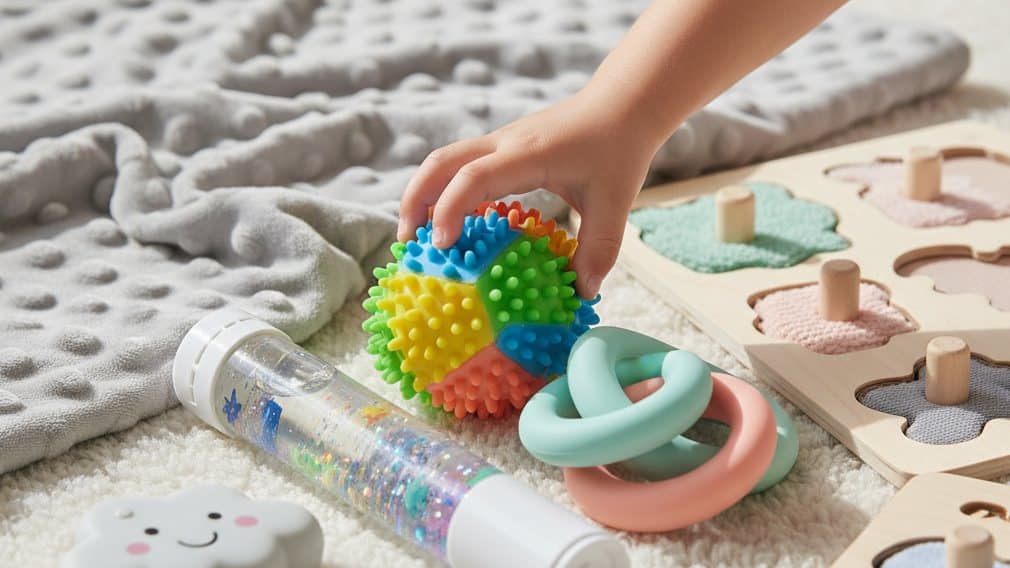
In the world of child development, we often seek simple yet effective tools to support our children. One of the best and most fun tools available is the sensory toy. But what are sensory toys exactly? These are special objects made to stimulate a child’s five main senses:
- Touch.
- Sight.
- Sound.
- Smell.
- Taste.
They can also target the two “hidden” senses: the vestibular system (which regulates balance and movement) and proprioception (which involves body awareness). Think of them as tools that help a child build focus, learn to regulate their emotions, and feel calm.
Sensory toys work by providing a safe, predictable input to the nervous system. This input helps the brain organize all the data it receives every day. That’s why children often use them for calming down when they feel upset or overstimulated. They’re also vital for improving a child’s coordination and focus during playtime or learning activities.
To give you a quick idea, here are some common sensory toy examples: simple stress balls that you can squeeze, popular fidget spinners that you can manipulate, chew necklaces for oral stimulation, and large sensory bins filled with rice or sand. These items are just a few examples of the wide range of benefits sensory toys offer children of all ages and abilities.
What Are Sensory Toys Used For?
Sensory toys are very versatile. Knowing what sensory toys are used for can help parents and teachers use them effectively. At its core, it supports a process called sensory integration. This is how the brain takes in, organizes, and responds to sensory information. For children whose nervous systems are easily overwhelmed — meaning they might be sensitive to bright lights or loud noises — these toys can act as a natural, safe way to calm them down.
These tools are not just for children with specific developmental needs, such as autism. They are useful in play therapy, in busy classrooms, and as part of a calming home routine for any child. If a child is restless and has trouble sitting still, a fidget toy can give their hands something to do, allowing their mind to focus.
Many different sensory toy examples target specific needs. A weighted blanket or toy gives deep pressure input, which is very grounding for the proprioceptive sense. A chewy tube or necklace can satisfy an oral sensory need safely. Light-up toys or objects that vibrate offer different kinds of stimulation. By choosing the right tool, you can help a child get exactly the kind of sensory input they need.
Benefits of Sensory Toys for Child Development
The advantages of using these tools are clear and wide-reaching. The benefits of sensory toys include improvements in several key areas of development:
- Improved Attention Span. A child who is constantly seeking sensory input can use a toy to quickly satisfy that need, allowing them to focus better on tasks like reading or homework.
- Better Fine-Motor Control. Toys like putty, playdough, or lacing beads strengthen the small muscles in the hands and fingers, which are essential for writing and other everyday tasks.
- Stronger Emotional Regulation. Repetitive, rhythmic motions — like bouncing on a therapy ball or rocking back and forth — help a child learn self-soothing techniques. They provide predictable input that helps the child calm their body.
In addition to these benefits, sensory tools encourage communication and interaction. When children play with a sensory bin together, they naturally discuss the textures and objects they encounter. This builds social skills. Over time, the confidence a child gains from being able to calm themselves and manage their body can extend to greater independence in daily routines.
Choosing the Right Sensory Toys for Your Child
When it’s time to buy a toy, parents often wonder, “What are sensory toys good for my child?” The answer depends on your child’s sensory profile. Does your child seek a lot of movement and touch (a seeker)? Or do they avoid loud noises and bright lights (an avoider)?
- For Seekers. Look for items that provide intense input — for example, trampolines, rough textures, or bright, spinning lights.
- For Avoiders. Choose items that offer calming, gentle input, including soft blankets, quiet fiddle toys, or weighted lap pads.
Always prioritize safety. Ensure the materials are durable and non-toxic, especially when purchasing items for oral use, such as chewable jewelry. The toy should also be age-appropriate to prevent choking hazards.
The best strategy is often to combine several sensory toy examples to create a balanced sensory diet. A child might use a chew necklace while reading a book to stay focused, then use a therapy brush or soft blanket to wind down before bedtime.
Leave A Comment